


28 Feb Residential care as therapeutic framework
Residential care is not accommodation. It is a clinical extension of treatment.
The environment in which recovery takes place directly influences nervous system regulation, emotional processing, and therapeutic depth. For this reason, residential living is intentionally designed to create safety, predictability, and psychological containment.
At Bonaire Recovery, the living space is structured to support recovery at every level — not as a background setting, but as an active therapeutic element.
The role of environment in recovery

The nervous system continuously responds to surroundings.
Noise, unpredictability, overstimulation, and social pressure can interfere with emotional regulation and trauma integration. A clinically designed residential environment aims to:
reduce external demands
limit sensory overstimulation
establish steady daily rhythms
preserve personal dignity
protect privacy while maintaining connection to care
When the environment feels stable, the individual can focus fully on therapeutic work.
A one-guest residential model

Exclusivity, in its truest sense, means singular attention.
Our residential model is structured to accommodate one guest at a time. This allows:
complete privacy
uninterrupted therapeutic immersion
flexible scheduling
immediate clinical responsiveness
absence of social performance or peer comparison
There are no group dynamics to manage. No competing needs. No shared therapeutic space. The entire residential and clinical structure is oriented around one individual.
Design guided by clinical priority

Every aspect of the residence is selected according to therapeutic considerations.
Key principles include:
calm visual atmosphere
natural light exposure
minimal acoustic intrusion
comfortable, functional interiors
clearly defined private and shared areas
access to restorative outdoor environments
Design supports regulation — not appearance. Aesthetic refinement is secondary to psychological safety.
Private and therapeutic spaces

Residential living balances solitude with structured care access.
This includes:
private suites for rest and reflection
dedicated areas for therapeutic preparation
calm shared spaces used intentionally, not socially
clearly maintained boundaries between personal and professional zones
Privacy is protected without creating isolation. The goal is emotional safety, not withdrawal.
Daily structure and rhythm

Predictability stabilises the nervous system.
The residential setting supports:
consistent meal timing
structured transitions between sessions
protected integration periods
alignment between therapeutic work and daily flow
Rhythm reduces internal chaos. Consistency builds trust — both psychologically and physiologically.
Integration between living and treatment

In truly exclusive rehabilitation, residential care and clinical care are not separate domains.
They operate as one integrated system.
This ensures:
immediate access to professional support
seamless transitions between therapy and reflection
continuous clinical oversight
coherence between daily life and therapeutic goals
Recovery does not pause when sessions end. The environment continues the work.
Privacy and discretion
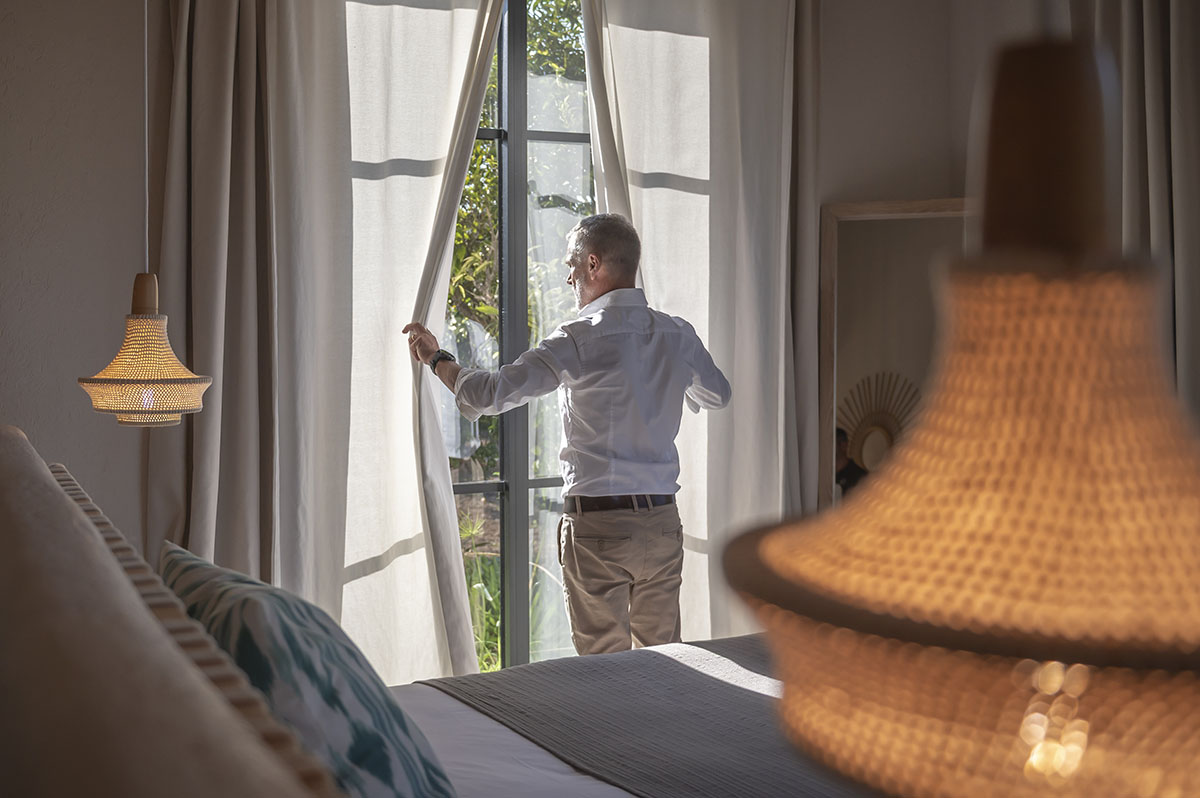
Confidentiality is structural, not procedural.
Residential design includes:
controlled and discreet access
limited external visibility
confidential coordination of services
protected arrival and departure processes
Psychological safety depends on trust.
Trust depends on discretion.
What residential care represents

It is:
clinically structured
emotionally contained
intentionally regulated
aligned with therapeutic progression
It is not:
hospitality accommodation
a lifestyle retreat
an unstructured living arrangement
a substitute for psychiatric or psychological care
The residence exists to support treatment — not replace it.
Frequently Asked Questions
Is the residence shared? No. The residential model is structured around one guest at a time to ensure complete privacy and individual focus.
Can clients leave freely? External engagement is guided by clinical assessment and therapeutic planning, ensuring stability and safety.
Is residential care mandatory? Residential care forms part of specific treatment pathways and is discussed during the admissions process.